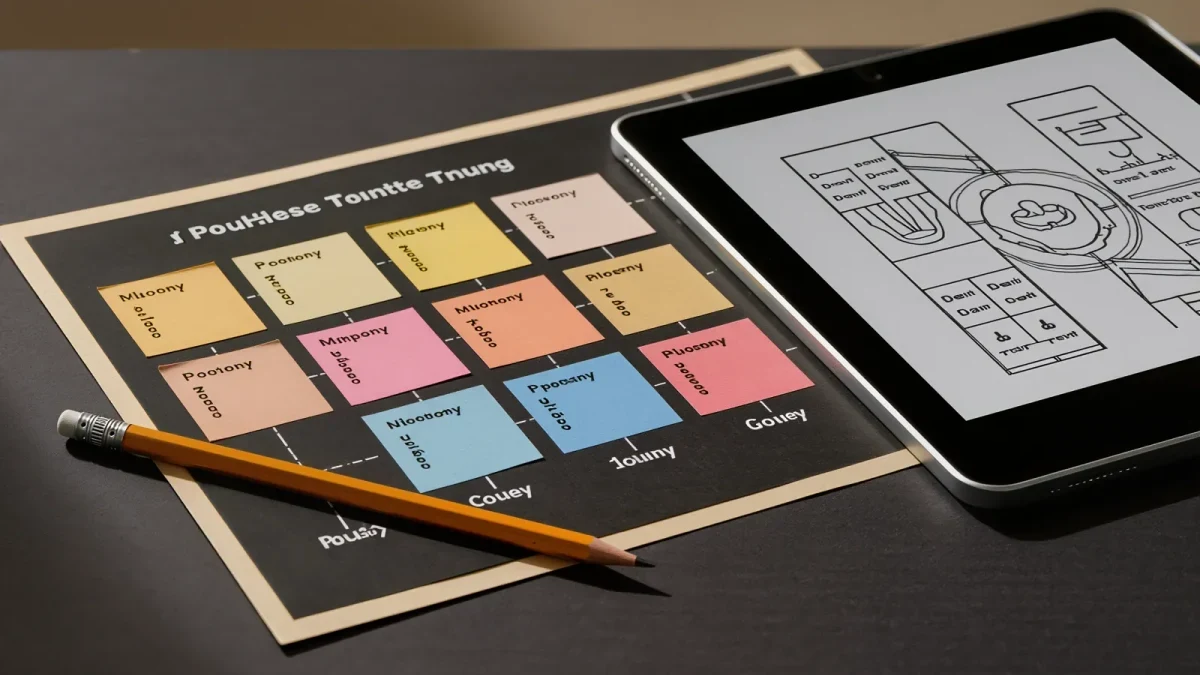
A strong instructional design portfolio is short, and the reasoning is blunt. Devlin Peck, an instructional designer who publishes portfolio guidance, defines it as a simple website holding one to three polished projects. The flagship case walks through the full design process. Hiring managers, in his framing, open the work before they trust the resume.
Research from education hiring adds a caution flag. A 2015 survey covered 170 school administrators across eight North Georgia districts. It found e-portfolios were not strongly favored in hiring decisions. Panels favored practical artifacts instead: certification documents and classroom management plans, per the study in Georgia Educational Researcher. The lesson travels well beyond teaching. For related coverage, see How teachers become school technology coordinators.
Which artifacts do hiring teams open first?
The flagship project goes first. Peck’s guide says a few deep projects beat a wall of shallow ones. It describes the flagship as the piece that walks through the whole design process, from problem analysis to finished build. Screeners open it for decisions, not decoration.
For career changers, the resume still clears the first pass. The portfolio closes it. Recruiters read both, and the work answers what bullet points cannot: what got built, for whom, and why each choice held. This connects to our earlier piece, Instructional design salaries for career-changing teachers.
Supporting artifacts fill the rest. His build advice puts storyboards with programming notes next to finished modules. A scenario course pairs with a reference job aid. Each artifact answers one question a screener brings: can this person analyze, structure, and finish learning work?
How do candidates show process instead of polish?
Document the decisions. Peck’s build sequence starts with a real performance problem, moves to a text-based storyboard with programming notes and no visuals, then to visual mockups before any authoring work starts. That order puts reasoning on the page where a screener can find it.
A case study frame helps: the problem, the audience, the constraint, the choice made, and what followed. The Georgia study points the same direction from the other side. Panels responded to evidence they could check, not to descriptions of it.
What does education hiring research say?
The survey work deserves a close read. Zhou and Helms surveyed 170 administrators from 84 K-12 schools across eight North Georgia districts. The topic was e-portfolio use in teacher hiring. The published finding was blunt: the study reports e-portfolios were not strongly favored for use in decision-making.
The fix list is the useful part. The authors recommend actively providing access to artifacts employers value. Named examples include certification documents and classroom management plans. The list extends to work with IEP students, families, and classroom technology. Translation for designers: attach the artifact a screener can verify.
What should come out?
Volume goes first. Peck’s guidance caps the site at one to three polished projects and treats sample walls as dilution. Every screen that asks for clicks without explaining anything is a screen a hiring manager skips.
Also out: screenshots without context, certificates as hero content, and outcome claims the artifacts cannot support. The Georgia finding cuts here too. Panels did not reward the portfolio as a genre; they rewarded named, checkable contents. Polish without receipts reads as polish.
Metrics sit in the same rule. A line about completion rates means little without the base and the window. State the group, the measure, and the dates, or leave the number out.
Conclusion: receipts over polish
For teachers moving over, the play is narrow. Build one flagship case around a real performance problem, storyboard it on the record, and add two supporting artifacts. Keep certification documents and classroom evidence within reach, because the research says panels look for exactly those.
One gap remains. The Georgia study covers school hiring. Peck’s guide reflects one practitioner’s read of the design market as of 2026. Neither source is a census of corporate design panels. Both still point the same way: checkable work beats polished claims.