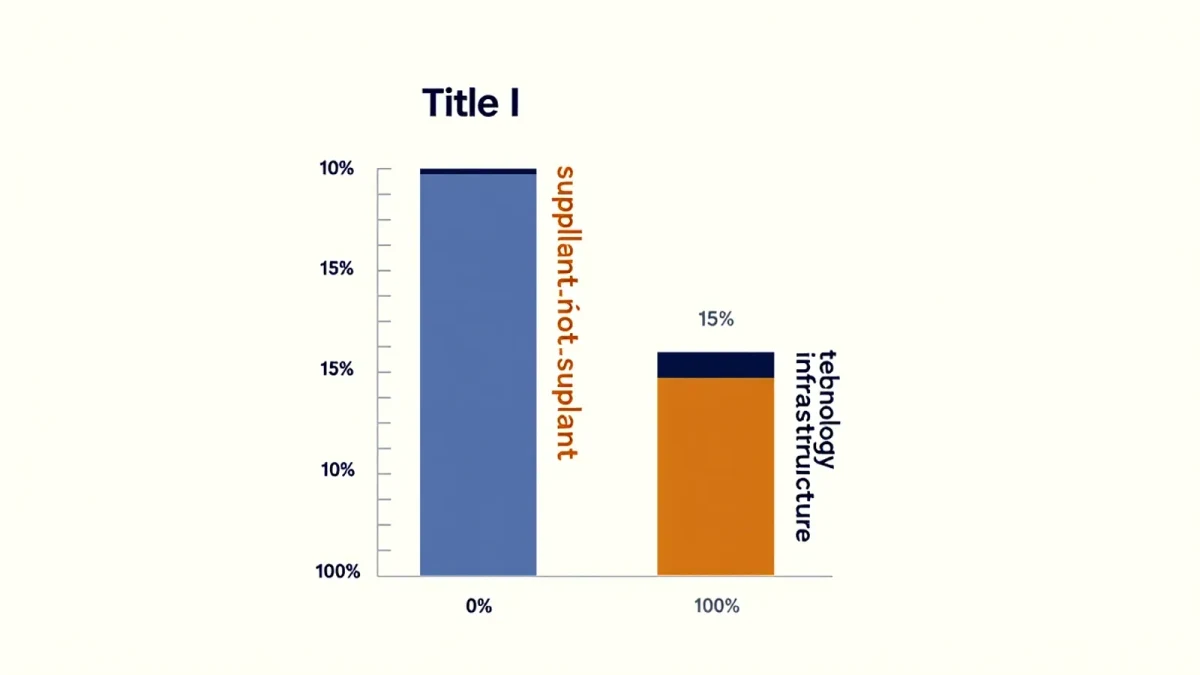
Title I, Part A — the largest federal K-12 program, distributing roughly $15–18 billion a year depending on appropriation — places no percentage cap on technology purchases. Districts can legally buy devices, software, and digital curriculum with Title I, per long-standing US Department of Education guidance, provided the purchases supplement rather than supplant state and local funds and serve identified Title I students. The confusion, and the audit risk, comes from mixing that rule up with a different program that does have a hard cap.
What changed for technology buyers?
Two clarifications matter for anyone planning purchases. First, under the Every Student Succeeds Act, schoolwide Title I programs gained flexibility to fund comprehensive technology purchases; earlier guidance from EdSurge's 2016 coverage of the proposed rules noted this widening of allowable uses. Second, the often-cited technology cap belongs to Title IV, Part A: per the US Department of Education's program guidance and state FAQs from Wisconsin and Kentucky, no more than 15 percent of Title IV-A funds may go to technology infrastructure — devices, equipment, software, and digital content — with the remainder directed to effective use, including professional learning.
The distinction decides real money. A district that routes a device refresh through Title IV-A can blow through the cap in one order; the same purchase through a schoolwide Title I plan, tied to identified students' needs, is generally defensible.
What does supplement-not-supplant require in practice?
For schoolwide programs, the test is procedural: the district must conduct a comprehensive needs assessment and document that Title I funds are paying for additions, not replacing what state and local money would otherwise cover. Buying software Title I students use is allowable; using Title I to cover a device line item the local budget previously funded, freeing local money for other purposes, is what auditors flag.
The detail most buyers miss
Title I purchases still follow federal procurement rules under the Uniform Guidance — competitive bidding thresholds, conflict-of-interest standards, and documentation that many district purchasing offices apply only loosely to local funds. Per several state education agencies' allowable-cost guidance, including South Carolina's ESSA handouts, the documentation burden is on the district, and vendor quotes alone do not satisfy it. The legal question is rarely whether technology is allowed; it is whether the paper trail would survive a federal single audit. Districts that pair every Title I technology purchase with a one-page needs-assessment reference, a supplement-not-supplant note, and a procurement-method record rarely face findings — and renew the same purchases year after year without re-litigating them.