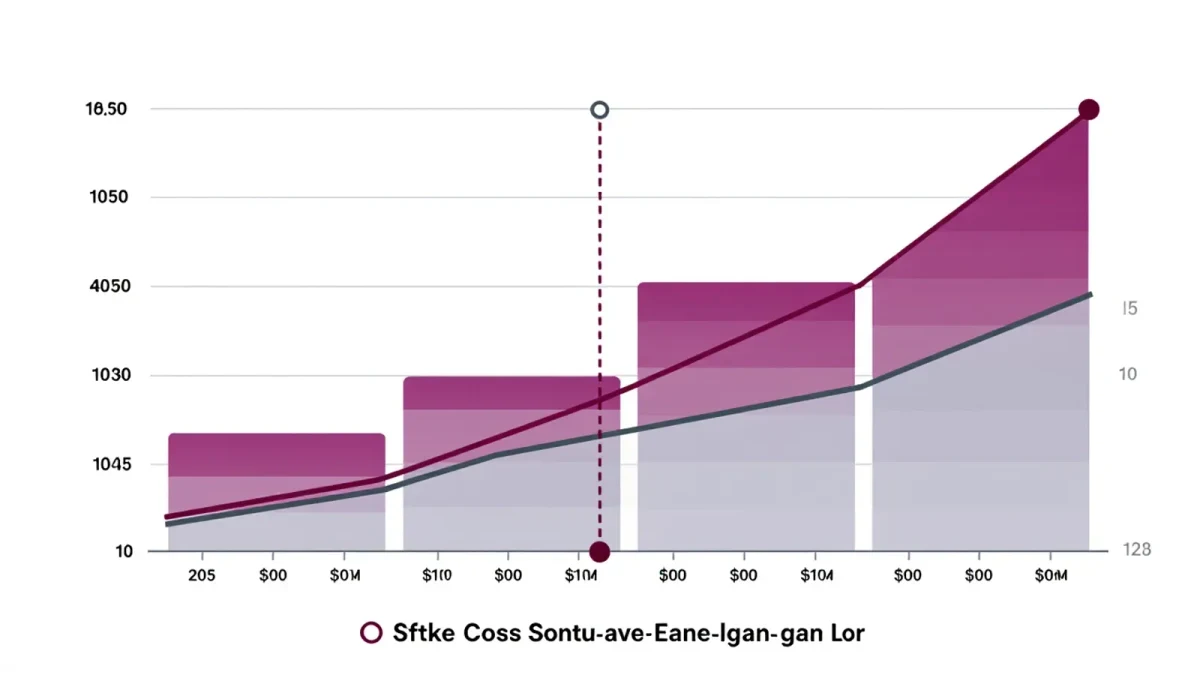
Teacher salary progression is mostly a ladder, not a curve. In most public school systems, pay rises in fixed annual steps for the first decade or so, then flattens unless you add a credential or move into administration. The ladder shape matters more than any single year's raise: the big decisions about your earnings are made in the first few years, when you choose a district and decide whether to pursue a graduate degree.
This guide explains how those scales typically work, what actually moves a teacher up them, and where the common assumptions — that experience alone compounds indefinitely, that a master's degree always pays for itself — break down. The honest answer up front: experience reliably raises pay early in a career, degree-level and certification bumps are real but vary widely by district, and late-career growth usually comes from changing roles rather than accumulating years. For the wider context on pay in adjacent roles, our Careers coverage tracks salary data across school and post-school jobs.
How does a typical teacher pay scale advance?
Most public districts in the United States use a "step and lane" schedule. A step is a year of credited experience; a lane is an education level, such as a bachelor's degree, a bachelor's plus graduate credits, or a master's degree. Your salary is where your step meets your lane. Each year you move one step down the schedule, and completing coursework moves you across into a higher lane.
The practical consequence is that progression is front-loaded. Steps are largest in the early years and shrink as the schedule matures, and many schedules top out or flatten after fifteen to twenty-five years. Two teachers with the same degree can end up far apart if one changed districts and lost credited years, while the other stayed put and banked every step. That is why a mid-career move deserves a harder look than it usually gets: what looks like a raise can be a step reset.
Private schools, charters and international schools often skip the published schedule entirely, negotiating pay individually. That gives flexibility but removes the guarantee that year twelve automatically earns more than year eleven.
Does a master's degree change the trajectory?
On most step-and-lane schedules, yes — a master's lane sits above the bachelor's lane at every step, so the difference compounds over a career. But the size of that gap is set locally, and it is not uniform. Some districts pay a substantial lane differential; others pay a token amount that never recoups tuition. Before enrolling, read your district's actual salary schedule and compute the lane gap at your current step, then at the steps you expect to hold over the next decade.
Our earlier look at part-time doctoral programs for working teachers: the cost-benefit reaches a similar conclusion at the doctoral level: the pay bump is smaller and slower than most people assume, and it depends heavily on whether the district's schedule rewards it at all. The same arithmetic applies to master's degrees, just with smaller numbers on both sides.
Do certifications and micro-credentials raise pay?
It depends on which credential, and who recognizes it. Certifications that a state or district formally values — a reading specialist endorsement, an administrator license, National Board Certification — can carry stipends or lane placement where the local contract says so. Whether National Board Certification is worth the cost and the wait is genuinely district-specific: some systems pay an annual supplement, others pay nothing beyond the certificate itself.
Micro-credentials are a different case. Our review of the evidence, micro-credentials rarely change teaching or pay, research shows, found that these short digital badges rarely move salary unless a district explicitly ties them to lane advancement — which few do. They can build skills; they seldom build pay.
Teaching itself, as an occupation, is credential-gated rather than seniority-gated at entry. As Wikipedia's overview of the teaching profession notes, formal teaching typically requires teaching certification, with education requirements varying by country — and the competencies involved run well beyond subject knowledge to curriculum, assessment and psychology. Certification gets you onto the ladder; it does not determine how fast you climb it.
What role do geography and district wealth play?
Geography is the largest single variable in teacher pay, larger than degree level in many cases. Scales are set locally, so the same step-and-lane position can pay very different amounts across state lines and even across neighboring districts. Cost of living, state funding formulas, local property tax bases and union contracts all feed into the schedule. A teacher who relocates should compare whole schedules, not starting salaries — a district with a higher starting step can still trail one with a richer late-career schedule.
Regional variation also shows up in what districts pay for. Some reward advanced degrees generously; others have shifted that money toward hard-to-staff subjects or high-need schools. If your move is driven by pay, the schedule document — usually public on the district website — tells you more than any recruiter conversation.
When does pay growth come from changing jobs?
For most teachers, the steepest raises after the first decade come from changing role, not accumulating years. Moving into administration typically means leaving the teacher schedule for an administrative one, which our analysis of school administrator pay: what public salary data shows covers in detail. District-level roles — instructional coaching, technology coordination — sometimes carry stipends rather than salary changes, which is worth checking before accepting the extra workload.
Leaving the classroom entirely is the other path. Teachers move into instructional design and corporate training, and our reporting on instructional design salaries for career-changing teachers and corporate training jobs for teachers shows those exits can raise pay — with trade-offs in job security and benefits. Any move out of a district also touches your pension, which what leaving a district does to your teacher pension explains; a nominally higher salary can be a net loss once pension service credit is counted.
CareerExplorer's profile of the teacher's day-to-day duties is a useful reminder of why pay alone rarely settles these decisions: the role bundles instruction, assessment, classroom management and family engagement, and adjacent jobs strip away most of those duties. Pay progression is one column in the comparison, not the whole table.
What this means for your next five years
Three practical readings of the evidence. First, protect your steps: changing districts can reset credited experience, so get the new district's placement of your years in writing before resigning. Second, check the lane math before any degree: the schedule, not the program brochure, tells you whether the credential pays. Third, treat late-career growth as a role question. The schedule will flatten; your options will not.
What the public record does not settle: exact lane differentials, stipend amounts and step-credit transfer rules are local, and they change with each contract. Read your own district's salary schedule and collective bargaining agreement — those two documents answer most of what teachers ask about pay progression.