Plan your Chromebook budget around Google's Auto Update Expiration date, not around how the hardware looks. A device that still powers on but has passed its AUE no longer receives ChromeOS updates or security patches, which turns it into a compliance problem rather than a learning tool. The company behind the fleet-management guide Manage1to1 puts it plainly: a Chromebook in perfect physical condition that hit its AUE last month is a liability sitting on a student's desk.
That single distinction reshapes the whole budgeting exercise. The hardware may physically survive eight years with reasonable care, but most school Chromebooks are replaced every four to six years in practice, and the AUE date — not a broken hinge — is usually the real deadline. Budget for repairs early in a device's life, replacements as AUE dates cluster, and you avoid both over-buying and running unpatched devices.
Here is how to read the two clocks, decide repair versus replacement, and forecast a multi-year device budget that survives contact with a school board.
What is the AUE date, and why does it control the budget?
Auto Update Expiration is the date after which a Chromebook stops receiving ChromeOS updates, security patches, and technical support from Google. The date is set by the device's platform launch, not by the day your district bought it. Two devices purchased on the same purchase order can carry different expiration dates if they sit on different platforms.
The support window has been stretching. According to AGP's explainer on the AUE policy, original Chromebook AUE windows ran three to five years, Google later extended support to eight years for models launched in 2020 or later, and under the fully effective policy many newer platforms now qualify for up to ten years of automatic updates. Not every model qualifies for the full ten, so check each platform rather than assuming.
You can find a device's AUE date in two ways, both documented by AGP: open Settings, go to About ChromeOS, select Additional details, and read the Auto Update Expiration date — or search the model name on Google's official Auto Update policy list. If your asset inventory does not map AUE dates to every serial number, you are planning blind.
After AUE, the device keeps working, but the version of ChromeOS on it is frozen. Browser compatibility degrades over time, and the security gap widens with every vulnerability Google patches on supported devices. Manage1to1 also flags the compliance angle: many state and federal frameworks tied to student data privacy expect devices handling student information to run supported software. An unpatched Chromebook is a harder conversation with a privacy officer than a missing charger.
When should a district repair instead of replace?
Repair when the device is still within its AUE window, structurally sound, and economical to fix. That is the framework AGP lays out, and it follows from the policy shift: with support windows stretched to as long as ten years, districts can shift from a "replace at expiration" mindset to a lifecycle approach where keeping devices operational matters more.
The practical consequence is that repair capacity becomes a budget line, not an afterthought. AGP argues that longer update windows increase repair demand and make access to quality replacement parts and in-house repair resources critical to capturing the full lifecycle. A device with six years of AUE left but a cracked screen is cheap to save. A device with six months of AUE left and a swollen battery usually is not worth the labor.
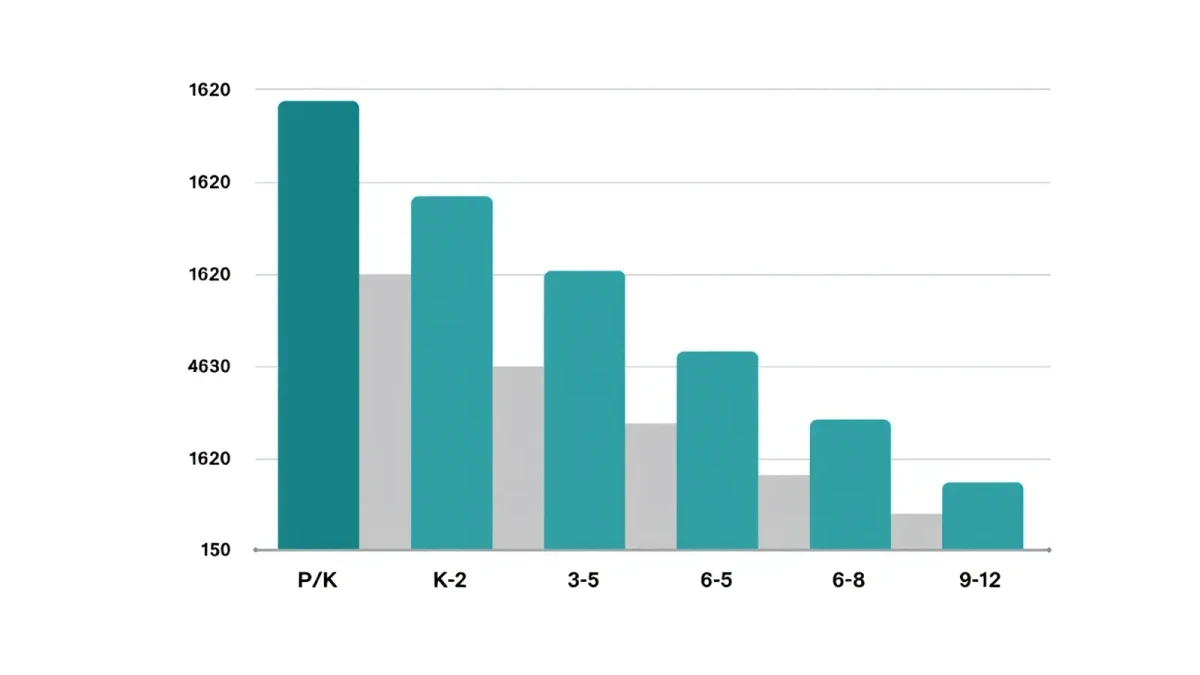
Wear rates differ by grade level, too. Manage1to1 notes that Chromebooks move through backpacks, lockers, cafeterias, and the occasional drop from a desk, and that elementary grades are harder on hardware than high school. A device that might last seven years in an office can show significant wear by year four in a middle school. Education-line builds from Lenovo, HP, and Acer — ruggedized hinges, reinforced ports, spill-resistant keyboards — are what push a fleet toward the higher end of the lifespan range.
What do the hidden costs of a broken device actually include?
The repair invoice is the smallest part. MAXCases, which sells device protection, argues that the larger costs are instructional and administrative: a student without a working device cannot participate in the day's lesson, and an IT department buried in repair backlog shifts from strategic work into reactive triage. Those are vendor claims from a company with a protection product to sell, so weigh them accordingly — but the downtime point stands on its own logic regardless of who says it. We covered a connected angle in The hidden costs of switching learning management systems.
There is also a procurement risk when replacements slip. MAXCases reports that hardware prices have climbed sharply, with some models seeing increases of 20 to 40 percent, driven by memory and semiconductor demand shifting toward AI data centers; memory's share of a laptop's hardware cost has roughly doubled, per the same account. When a district cannot replace a fleet on schedule, it faces emergency procurement — buying whatever is available at a premium rather than the model that fits instructional needs. Quotes expire faster and lead times stretch, so a device priced into the January budget may be out of reach by the time the purchase order clears.
For budgeting purposes, treat those market figures as directional and dated to the vendor's 2026 reporting, and re-verify pricing against live quotes before committing to a multi-year plan.
How should a district forecast multi-year device costs?
Start from a per-device, per-year number rather than a per-purchase number. K-12 Tech, a lifecycle-management vendor, offers a worked example: a $200 Chromebook plus a $32 management license plus extended warranty over four years lands at roughly $300 to $340 per device, or $75 to $85 per student per year. The company says its own full-service model — covering repairs and next-day replacements at $14 per device per year — stretches device life to six or seven years and saves a 1,000-student district over $60,000 annually. That is the vendor's math about the vendor's service, not an independent evaluation, but the underlying structure is useful: amortize device, license, warranty, and staff time across the years the device actually stays in service.
Then stagger the refresh. Because a mixed fleet carries AUE dates spread across a wide window, Manage1to1 notes districts are unlikely to face a cliff where everything expires at once. That staggering is a planning opportunity: replace cohorts as their AUE dates arrive instead of refreshing the whole fleet on a fixed four-year drumbeat. AGP makes the same point — longer windows let technology departments stagger refresh cycles rather than replacing entire fleets solely because of expiration constraints.
A defensible forecast has four inputs: upcoming AUE milestones across the fleet, expected repair volume and parts availability, refresh-cycle budget lines, and — increasingly — sustainability targets, since fewer premature refreshes mean less e-waste. AGP recommends evaluating exactly those items on a regular cycle. For a fuller picture of program-level spending, see what a one-to-one Chromebook program actually costs a district, and how hidden costs behave in other platform switches, such as changing learning management systems. For related coverage, see What a one-to-one Chromebook program actually costs a district.
What this means for your next budget cycle
Map every serial number to its AUE date before you write a single line of the technology budget. Repair devices early in their support window; retire them at AUE regardless of cosmetic condition. Build the per-device, per-year cost — hardware, license, warranty, and staff time — into the forecast, and hold a contingency for a hardware market that has recently been unstable.
For a single school, the takeaway is simpler: buy education-line hardware, protect it physically, and fix it while Google still supports it. For a district running a 1:1 program, the takeaway is sequencing — staggered cohorts, tracked expiration dates, and a repair pipeline sized for a fleet you intend to keep longer than you used to.
One honest gap: none of the available sources independently evaluates whether extended-life programs actually hold up at scale. Every cost figure here comes from a company selling lifecycle services or device protection. The AUE mechanics come from Google's own policy as these vendors relay it, and those are solid. The savings claims deserve a pilot in your own district before they go in a board presentation.