Twenty-two states plus the District of Columbia had adopted bell-to-bell school cellphone bans by the fall of 2025, and the first year of hard data is now in. It tells a more complicated story than either advocates or critics promised: classrooms report calmer behavior and more face-to-face talk, but enforcement costs real instructional minutes, and test-score effects remain largely unmeasured. A Pew Research Center survey in June 2025 found nearly three-quarters of U.S. adults support banning phone use during the school day.
What changed between 2024 and 2025?
The first wave of statewide bans took effect for the 2024-25 school year, when states including Indiana, Louisiana and Florida either launched or tightened restrictions. The 2025-26 school year brought the second, larger wave, with states such as Oklahoma requiring every district to run bell-to-bell prohibition, meaning phones are off-limits from the first bell to dismissal rather than merely during class time.
The shift in public opinion has been fast by education-policy standards. An EdChoice survey in 2024 found only 36 percent of American adults supported bell-to-bell bans, with 53 percent opposed. By mid-2025, Pew's polling showed support for banning phones during the school day at roughly 74 percent. Rarely does a school-policy question move that far in a single year, and both camps agree the driver was parents, not teachers.
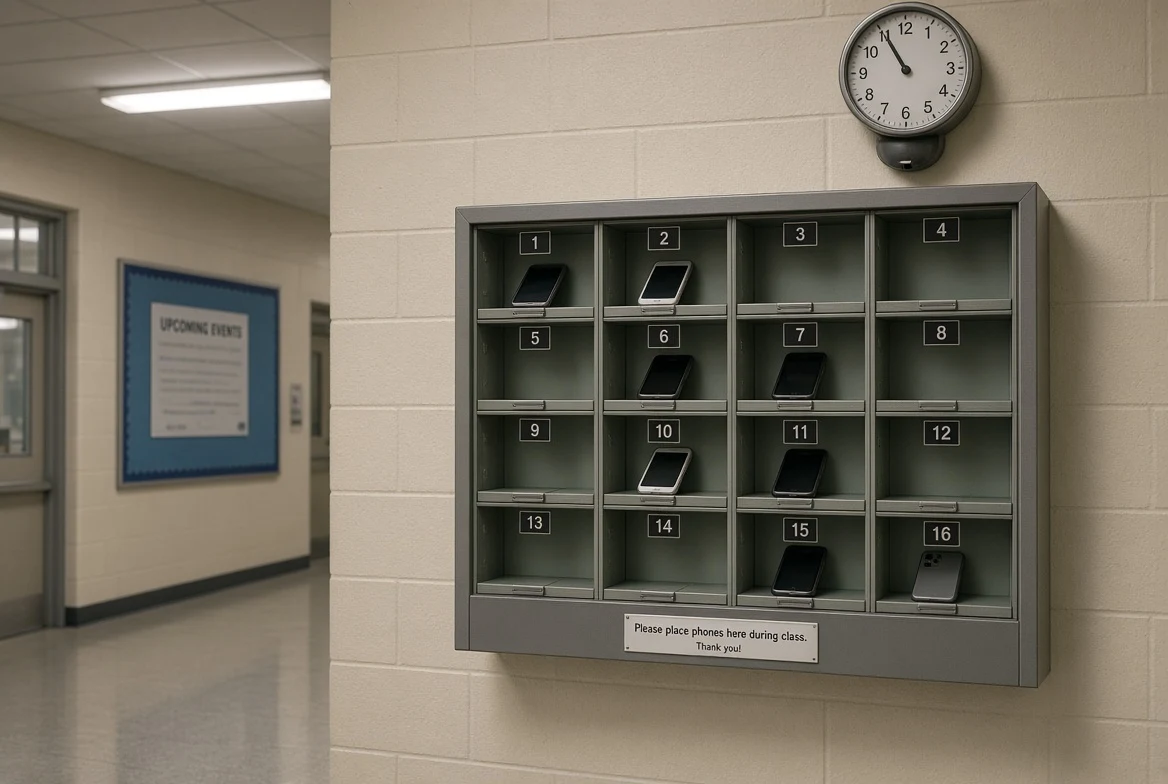
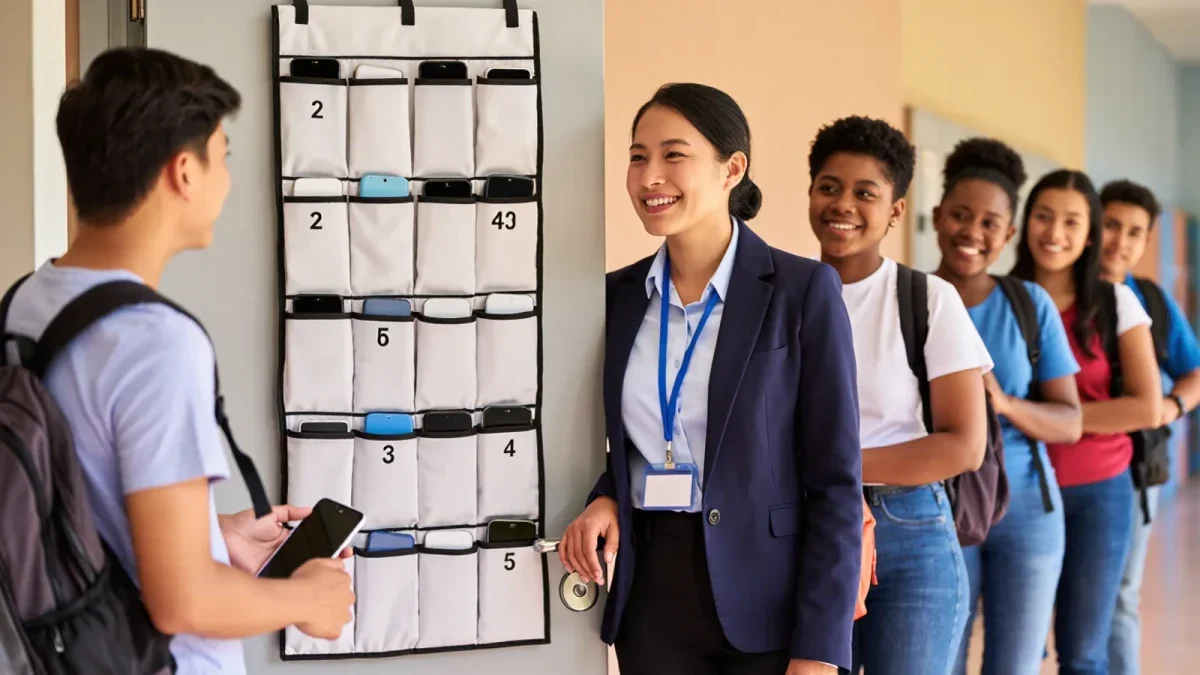
The mechanics vary more than the headlines suggest. Some districts use locking pouches, others require phones to stay in lockers, and some collect devices in hanging pocket charts at the classroom door. Bell-to-bell laws increasingly push toward the strictest model, sometimes called the gold standard: phones physically inaccessible during the entire day, including lunch.
Do bans actually change behavior?
The most consistent first-year finding is behavioral, and it comes from districts rather than national datasets. Large districts that ran full first years under bans, including Los Angeles Unified starting in the 2024-25 school year, reported fewer hallway filming incidents, less mid-class notifications traffic and more audible conversation at lunch. Teachers in surveyed buildings repeatedly describe the same thing: the argument at the start of the year, then a visible drop-off in phone-related referrals by October.
The counter-data is about adults, not students. School-level discipline records from the first enforcement year showed suspension and referral numbers climbing in some districts, concentrated in the opening weeks, as students tested the rules and as staff figured out what a violation actually merited. The pattern that emerged in district reports was that schools with clear, low-stakes escalation paths, a warning, then a pouch, then a parent pickup, saw enforcement friction fade, while schools that leaned on suspensions paid for it in October discipline statistics.
There is also an honesty gap teachers describe privately: pouch programs and locker rules work until the first fire drill, the first away game or the first lockdown scare, and every exception a school grants becomes the new negotiating baseline. Bans are a routine, not a law of physics, and routines need maintenance.
What about academics and mental health?
This is where the first-year data is thinnest, and where advocacy has outrun evidence. State test results released in 2025 cannot cleanly separate phone bans from tutoring money, staffing changes and curriculum shifts happening in the same buildings. Researchers tracking the question caution that credible academic-effect studies need multiple years and matched comparison schools, and those studies are still in the field.
The mental-health claim, that removing phones reduces anxiety and social conflict, is plausible but similarly under-measured at scale. What district surveys and teacher reports do support is narrower: fewer filmed fights, less coordinated skipping, and less social-media conflict spilling into the school day. Those are meaningful culture outcomes even if they never show up in a math score.
How are schools paying for it?
Locking pouches cost roughly 15 to 25 dollars per student per year depending on vendor and contract length, which for a mid-sized high school means a five-figure annual line item that did not exist before 2024. Districts have patched funding from general budgets, safety grants and parent-teacher organizations, and the patchwork is one reason some states moved to fund bans centrally in their 2025 legislative sessions.
The cheaper version, phones-in-lockers or pocket charts at the door, costs almost nothing but shifts the enforcement burden onto teachers, which is its own budget question. A policy that saves 20 dollars per student but costs every teacher five minutes of first-period management is not free; it is paid in a currency schools never have enough of.
What should a school take from year one?
The first-year evidence supports a modest claim: phone bans change the daily texture of school, quickly and visibly, and the behavior changes appear durable when enforcement is consistent and proportionate. The evidence does not yet support claims of academic recovery, and districts promising test-score gains from a pouch program are writing checks the data cannot cash.
Schools considering a ban in 2026 can reasonably expect fewer phone conflicts and a rough first month. They should budget for the hardware, decide the escalation ladder before August, and tell parents the safety plan explicitly, because the fastest way a ban dies is one frightened parent at a board meeting with a lockdown story. The schools that survived year one treated the ban as a culture project with a hardware component, not the reverse.