During the 2022-23 school year, roughly 14 million teacher absences went unfilled nationally, according to Frontline Education data cited by researchers, and districts managed to fill only about 54 percent of absence requests with substitutes. Two years later the structural math had barely moved: a substitute workforce of nearly 600,000 covering more than 30 million teacher absences a year, with fill rates still declining. The shortage's headline cost is instructional, but its daily cost is cultural, paid by the teachers left holding uncovered classes.
What happens on an uncovered day?
The mechanics are prosaic. A teacher calls out; no substitute picks up the request; the front office splits the students among remaining classrooms or presses staff to give up planning periods for coverage pay, typically 25 to 50 dollars a period, a fraction of what the hour is worth. The Brookings Institution's analysis of absence data found teachers average about 11.8 absent days a year, 6.6 percent of school days, which means coverage is not an emergency measure but a weekly condition in many buildings.
The cumulative effect reshapes the job. Planning periods, the contractually protected time teachers use for grading, parent contact and, crucially, recovery, convert into improvised teaching of unfamiliar students. Duty-free lunches shrink. And the teachers who say yes to coverage become more likely to be asked again, a feedback loop veteran teachers know by name.
Pew Research Center's 2024 teacher survey found 70 percent of teachers describing their schools as understaffed. The substitute pool is the shadow workforce behind that number: when subs are scarce, staffing adequacy is a coin flip that lands every morning at 6:30 a.m.
Why did the substitute pool shrink?
Substitute pay stagnated for two decades, and the post-2020 labor market repriced flexible hourly work everywhere except substitute teaching. A worker choosing between a warehouse shift at 22 dollars an hour with set hours and a sub day at 110 dollars with a 6 a.m. phone call, no benefits and a chance of being reassigned mid-day, increasingly chose the warehouse. Districts responded unevenly with daily-rate raises, some pushing past 200 dollars a day in competitive metros by 2025, and it helped at the margin without rebuilding the bench.
Two other drains matter. Certification and training requirements, tightened after 2020, raised entry costs at exactly the moment the gig economy lowered them elsewhere. And the teaching pipeline itself thinned: the Learning Policy Institute estimated in 2025 that roughly one in eight teaching positions nationally was unfilled or filled by an uncertified teacher, and every unfilled classroom pulls substitutes into long-term assignments, removing them from the daily pool.
The equity pattern is the part that gets least discussed. Brookings found the shortage hits disadvantaged schools hardest: they have higher absence rates, worse fill rates, and fewer internal staff to absorb coverage. Within a single district, the school with the highest-need students is routinely the one improvising coverage most often, which means the substitute shortage functions as a regressive tax on exactly the students research says can least afford disrupted instruction.
What does coverage strain do to a building over a year?
Culture effects compound quietly. Coverage becomes a test of team loyalty, and the teachers who refuse, entirely within their rights, get subtly marked. Morale surveys capture the residue: Gallup's burnout work found 52 percent of K-12 teachers reporting burnout very often or always as of 2022, the highest of any U.S. industry, and coverage strain is a named driver in the qualitative follow-ups that Gallup and RAND have published since.
Students feel it as discontinuity. A rotating cast of coverage means lost routines, more screens and worksheets, and the behavioral drift that follows any day without the adult who knows the classroom's norms. Attendance couples with it: 42 percent of public schools told the NCES School Pulse Panel in 2024-25 that student absences were a major concern, and chronic absence among staff and students reinforce each other, every hard winter week cycles more of both.
Administrators pay a third cost that rarely reaches the ledger: the average principal or assistant principal spends escalating morning time as a dispatcher, matching bodies to rooms, hours that came from somewhere.
What is actually working?
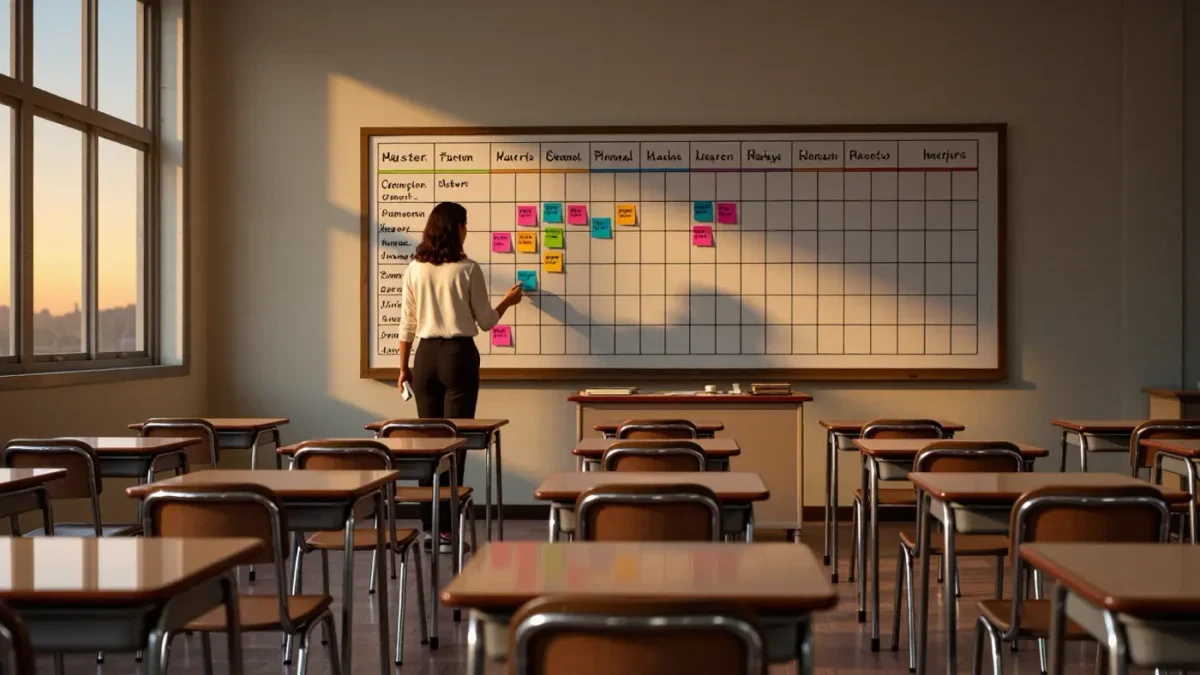
The districts that improved fill rates by 2025 did unglamorous things. They raised daily rates and, more importantly, guaranteed pay or offered standing weekly retainers to regular subs. They built internal pools, full-time building substitutes on salary, who cost more per person but convert the worst mornings into routine. They cut onboarding friction to same-week certification processing. And they formalized coverage, published schedules, fair rotation, real per-period pay, rather than relying on volunteers' goodwill.
The honest framing for a community: substitute coverage is not a side system, it is a load-bearing wall of school culture. A building can tolerate a shortage for a season, but a chronic one reprices every teacher's planning time, every student's routine, and every administrator's attention. Districts that treat subs as professional capacity rather than emergency labor report the only metric that matters on a February Tuesday: the 6:30 a.m. call that gets answered.